
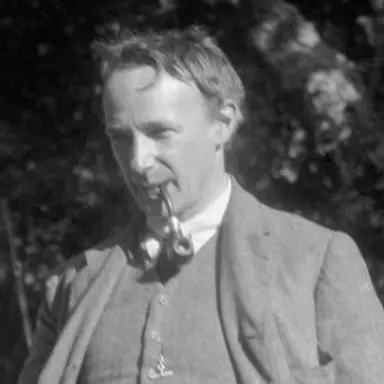
Portrait of G. E. Moore

G. E. Moore

Common Sense Realism · Modern · United Kingdom

Wikipedia

George Edward Moore was an English philosopher who, alongside Bertrand Russell, Ludwig Wittgenstein and earlier Gottlob Frege, was an initiator of analytic philosophy. He and Russell began de-emphasising the idealism which was then prevalent among British philosophers and became known for advocating common-sense concepts and contributing to ethics, epistemology and metaphysics. He was said to have had an "exceptional personality and moral character". Ray Monk dubbed him "the most revered philosopher of his era".

Summary from Wikipedia.

Saved takes

Can we know anything for certain?

Moore countered skepticism by insisting that we know ordinary facts, such as that we have hands, with more confidence than any philosophical premise implying otherwise.

I am more sure of simple everyday facts than of any abstract argument claiming I cannot know them, so the argument must be the thing at fault.

Source: A Defence of Common Sense

Is reality independent of the mind?

Moore opposed idealism by defending the certainty of ordinary claims, such as that he has hands. He argued that such commonsense knowledge is more secure than any philosophical premise implying the external world is mind-dependent.

I am more sure that external things exist than I could be of any clever argument against them, so idealist premises are what should be rejected.

Source: A Defence of Common Sense