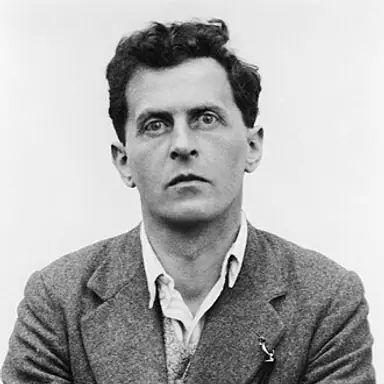
Later Wittgenstein argues that meaning lies in shared practices and forms of life, so a wholly private language is impossible. Understanding is thus a public skill, not a hidden inner transfer.
We understand each other because we share ways of acting and using words, not because we peek into each other's minds.
Source: Philosophical Investigations
In his late notes, Wittgenstein argued that doubt itself requires a background of things that are not doubted. Certainty is less a matter of justified knowledge than of the hinges on which our practices turn.
Some propositions stand fast, not because we have proven them, but because questioning and justifying anything depends on them.
Source: On Certainty
Wittgenstein located the mystical not in how the world is but in the fact that it is. He thought this wonder cannot be put into meaningful propositions, so it is felt rather than answered.
What is astonishing is not any particular state of the world but that there is a world at all, and language cannot properly express this astonishment.
Source: Tractatus Logico-Philosophicus