Greek philosophy
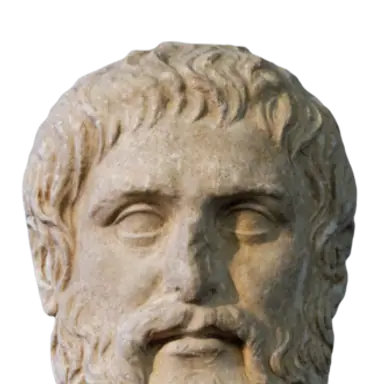
Plato treats understanding between persons as achieved through dialogue, where questions and answers gradually draw both toward shared truth. He is also wary of written words, which cannot answer back or adapt to the listener.
Real understanding happens in living conversation, when two minds test ideas together; fixed words alone cannot guarantee it.
Source: Phaedrus
Daoism
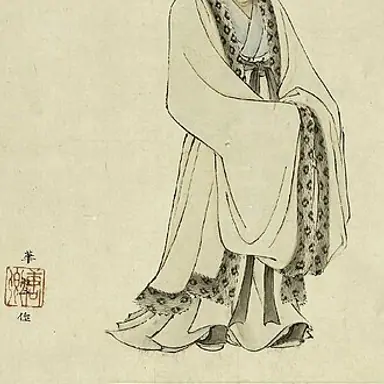
Zhuangzi plays with the limits of perspective and language, suggesting that each person lives within a view that is hard to leave. Yet he also depicts moments of intuitive, wordless rapport.
We cannot fully know another's joy as they feel it, yet a shared, easy attunement can arise beyond argument and words.
Source: Zhuangzi
Christian philosophy
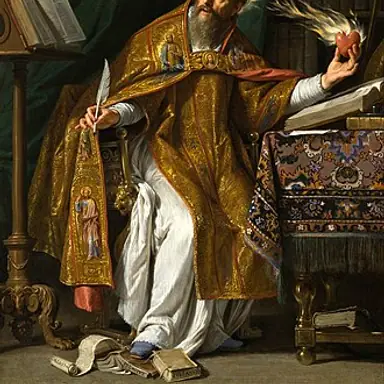
Augustine examines how signs and words convey meaning, concluding that words only prompt us, while understanding depends on an inner truth each person consults. Communication therefore points beyond itself to a shared source of insight.
Speech merely nudges the listener; real grasp occurs inside each mind, in light of a truth both can access.
Source: De Magistro
Hermeneutics
Dilthey distinguishes understanding of human life from causal explanation of nature. He holds that we can re-experience others' inner lives through their expressions, because we share a common human world.
By interpreting another's expressions and actions, we can re-live something of their experience, since human minds are not sealed off from each other.
Source: The Formation of the Historical World in the Human Sciences
Dialogical philosophy
Buber contrasts treating others as objects (I-It) with meeting them as whole beings (I-Thou). Genuine understanding occurs in such encounters, which are real but fleeting and cannot be forced.
Understanding arises when we meet another as a presence rather than a thing, though such meetings come and go rather than last permanently.
Source: I and Thou
Philosophical hermeneutics
Gadamer sees understanding as a fusion of horizons in which each partner's prejudgments are exposed and changed through conversation. Complete identity of viewpoints is neither possible nor needed.
We understand one another not by erasing differences but by letting our perspectives meet and widen into something shared.
Source: Truth and Method