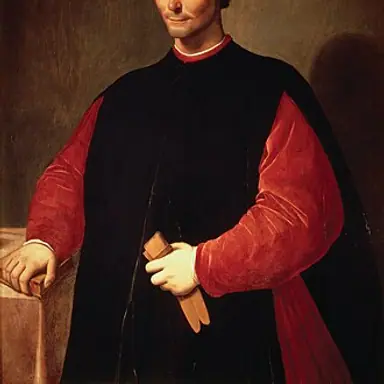
Machiavelli analyzed power realistically, advising princes to prioritize stability and security even through morally troubling means. In his Discourses he preferred republics with institutionalized conflict between classes as the best guard of liberty.
Rulers must deal with the world as it is, and free states last when their institutions channel the clash between elites and people into law rather than civil war.
Source: Discourses on Livy
Machiavelli offered a hard-headed view of adversaries in politics. He argued that half-measures against dangerous enemies invite future retaliation.
Minor injuries invite revenge while severe ones remove the capacity for it, so if you must harm an enemy, do it decisively rather than leave a wounded rival.
Source: The Prince
Machiavelli argued that rulers who keep faith rigidly may be destroyed by those who do not. He treated deception as a tool leaders must be ready to use when necessity demands.
A prince surrounded by the unscrupulous must be able to feign and break promises when circumstances require, though he should appear honorable.
Source: The Prince
Machiavelli observed that rulers who keep to conventional virtue can be ruined in a world of dangerous people. He judged political action largely by whether it secures and preserves the state.
A leader responsible for the safety of the state may have to do harsh things, and success in preserving order will be what people finally judge him by.
Source: The Prince
Machiavelli evaluates success in terms of effectiveness in acquiring and keeping power, combining skill (virtù) with the management of fortune. Results often judge actions in public life.
A ruler succeeds by adapting boldly to circumstances and holding the state, and people tend to judge such leaders by their outcomes.
Source: The Prince