Greek philosophy
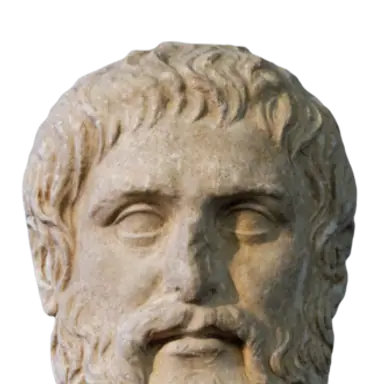
Plato argued that a just society is ordered like a just soul, with reason governing appetite and spirit. He doubted that untrained majorities could rule well and proposed rule by philosophers educated to know the Good.
Political power should belong to those who have the knowledge and virtue to see what is truly good, not to whoever is popular or wealthy.
Source: Republic
Greek philosophy
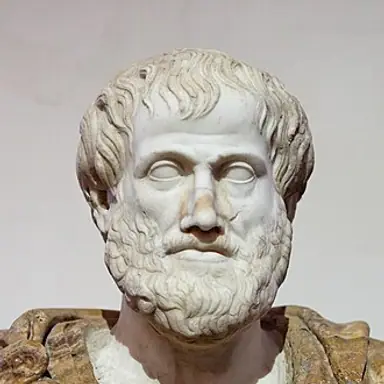
Aristotle compared actual constitutions and judged regimes by whether they serve the common good or only the rulers. He favored a mixed constitution anchored by a large middle class and rule of law.
The best practical regime balances the few and the many, is stabilized by a broad middle class, and rules for everyone's benefit rather than for a faction.
Source: Politics
Confucianism
Confucius held that good government begins with the moral cultivation of rulers, who lead by example rather than coercion. Social harmony arises from proper roles, ritual, and benevolence.
A ruler who is personally upright and caring will draw people to virtue more reliably than one who relies on punishments and decrees.
Source: Analects
Legalism
Han Feizi believed people respond to incentives, not moral example, so order requires clear laws, firm rewards and punishments, and administrative technique. The ruler must keep power and not depend on officials' virtue.
Stable rule comes from impersonal, publicly known laws enforced consistently, not from hoping rulers and subjects will be virtuous.
Source: Han Feizi
Islamic philosophy
Al-Farabi adapted Platonic ideas to an Islamic setting, describing a virtuous city led by a philosopher-prince who combines wisdom with prophetic insight. He contrasted it with ignorant and corrupt cities that pursue wealth or domination.
The ideal community is guided like a healthy body by a wise leader, aiming at genuine happiness rather than mere pleasure, wealth, or power.
Source: The Virtuous City (Principles of the Views of the Citizens of the Virtuous City)
Civic republicanism
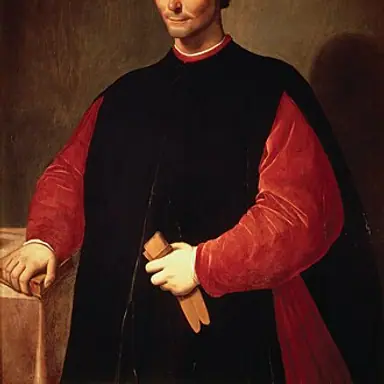
Machiavelli analyzed power realistically, advising princes to prioritize stability and security even through morally troubling means. In his Discourses he preferred republics with institutionalized conflict between classes as the best guard of liberty.
Rulers must deal with the world as it is, and free states last when their institutions channel the clash between elites and people into law rather than civil war.
Source: Discourses on Livy