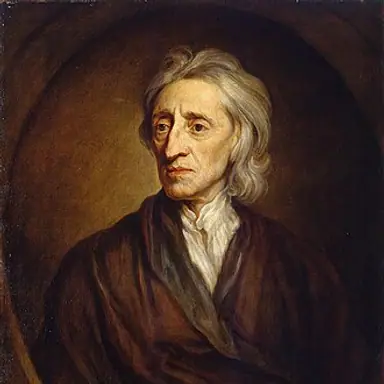
Locke grounded government in the consent of the governed and in natural rights to life, liberty, and property. Rulers who violate these rights lose legitimacy, and subjects may resist them.
Government is a trust created by free people to protect their rights, and it should be limited, accountable, and removable when it abuses that trust.
Source: Two Treatises of Government
Locke grounds politics in natural liberty and a basic equality of persons, with no one naturally subject to another. Government exists to protect life, liberty and property, giving liberty priority over distributive aims.
People are equal in their standing as free beings, and the state's job is to secure that freedom, not to level out outcomes.
Source: Two Treatises of Government
Locke grounds legitimate government in consent and the protection of natural rights. When rulers systematically violate those rights, the people retain a right to resist and replace them.
Authority exists to protect life, liberty and property, so persistent abuse by rulers dissolves the duty to obey and permits resistance.
Source: Two Treatises of Government
Locke linked consciousness to personal identity, treating it as the perception of what passes in one's own mind. Memory and continuous awareness constitute the self over time.
To be conscious is to be aware of one's own mental operations, and that reflexive awareness is what makes a person the same person across time.
Source: An Essay Concerning Human Understanding
Locke defines personal identity by continuity of consciousness and memory rather than by substance. A person is a thinking being who can recognize itself as the same across time, which matters for responsibility.
I am the same self as far as my consciousness reaches back to earlier thoughts and deeds, whatever the underlying substance may be.
Source: An Essay Concerning Human Understanding
Locke argued that personal identity is not tied to the same soul or the same body but to continuity of consciousness. A person is a thinking being who can recognize itself as the same across times and places.
You remain the same person as far as your awareness can reach back to your past actions and experiences and claim them as your own.
Source: An Essay Concerning Human Understanding