Society · Political philosophy

Should I obey an unjust law?

The thinkers agree that unjust laws pose a real moral problem and that obedience is normally valuable, but they split over whether the duty to obey survives injustice. Socrates and Hobbes lean toward compliance, Aquinas, Augustine and Locke allow refusal or resistance in grave cases, and Thoreau, King, Gandhi, Rawls and Antigone defend principled disobedience, while Hart and Raz recast the question as one about moral reasons, not legal status.

12 perspectivesClaude Sonnet 5.5Updated Oct 27, 2026A fresh run is rate limited and uses the same request limits as the rest of Perspective.

Answerability

No right answer

24 / 100

NoneContestedFactual

Common ground

Where they agree

  • Almost all of them hold that an unjust law raises a real…
  • Most accept that obedience has value as a general rule, whether because…
  • Several (Sophocles, Aquinas, Augustine, Thoreau) place conscience or divine law above human…
  • Thoreau, King, Gandhi and Rawls agree that disobedience should be open and…
  • Hobbes and Aquinas both allow that obeying may be prudent to avoid…

Fault lines

Where they differ

  • Obey or resist: Socrates and Hobbes stress compliance, through an implied promise or the need to avoid the state of nature. Thoreau, King, Gandhi and Antigone hold that refusal can be a duty.
  • Is an unjust law really law? Aquinas and Augustine say it lacks the full force of law, while Hart separates legal validity from moral worth, so an unjust rule can be law and the question of obedience stays open. For Hobbes, the sovereign's commands define justice.
  • Source of the duty to obey: Socrates grounds it in consent and benefit, Hobbes in the need for security, and Rawls in a duty to support just institutions. Raz doubts there is any general duty to obey the law.
  • Manner of resistance: Socrates favors persuasion and rules out escape. Antigone acts defiantly and alone, while King, Gandhi and Rawls require public, nonviolent, disciplined protest.
  • When resistance is justified: Hobbes allows it essentially only when one's life is threatened. Locke allows it against systematic abuse of rights, and Aquinas and Augustine limit refusal to laws that command wrongdoing or something against God.
  • Scope: Rawls limits civil disobedience to a nearly just society and to serious injustice, while Thoreau and Gandhi treat any cooperation with evil as wrong.

The council

12 perspectives

Socrates

c. 470–399 BCE · Greece

Greek philosophy

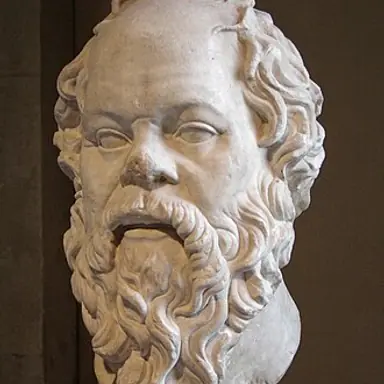
In Plato's depiction, Socrates accepts a death sentence he thinks is unjust rather than escape. He argues that living under a city's laws creates an implicit agreement to obey them, and that persuasion, not evasion, is the proper way to resist.

A citizen who has benefited from the city and stayed under its laws has in effect promised to abide by them, even when a verdict goes against him; the right course is to try to persuade the city, not to slip away.

Source: Crito

Sophocles

Greece

Greek tragedy

Through the figure of Antigone, Sophocles stages the conflict between a ruler's decree and older, unwritten obligations. The play invites readers to weigh civic order against conscience and duty to the divine and to family.

Antigone holds that a king's edict cannot override the deeper laws of the gods and of kinship, so she buries her brother knowing the penalty.

Source: Antigone

Thomas Aquinas

1225–1274 · Italy

Scholastic natural law

Aquinas holds that a human law contrary to natural law lacks the true force of law and is more a corruption of law than law. He allows that one may sometimes comply to avoid scandal or disorder, but never when the law commands something against God.

An unjust human rule does not bind in conscience as law should, though prudence may counsel compliance to prevent greater harm, unless it demands a wrongful act.

Source: Summa Theologiae

Augustine of Hippo

North Africa

Christian philosophy

Augustine argues that law divorced from justice is hardly law at all, and that states without justice resemble large bands of robbers. Still, he counsels Christians to endure earthly authority while owing final loyalty to God.

A rule lacking justice has little claim to be called law, yet believers should bear earthly power patiently, refusing only what God forbids.

Source: On Free Choice of the Will

Social contract theory

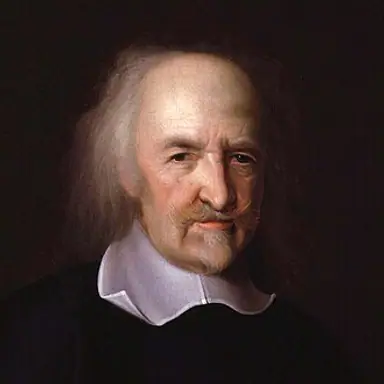
Hobbes holds that the sovereign's commands define justice in civil society, and that the alternative to obedience is the chaos of the state of nature. Resistance is justified essentially only when the sovereign threatens one's life.

Because order depends on a single final authority, subjects should obey even harsh laws, since disobedience risks a return to war of all against all.

Source: Leviathan

John Locke

England

Liberal political philosophy

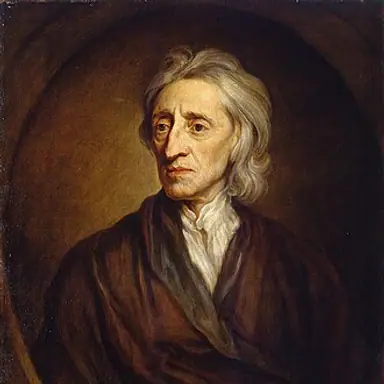
Locke grounds legitimate government in consent and the protection of natural rights. When rulers systematically violate those rights, the people retain a right to resist and replace them.

Authority exists to protect life, liberty and property, so persistent abuse by rulers dissolves the duty to obey and permits resistance.

Source: Two Treatises of Government

Ask your own

0 / 300