Greek philosophy
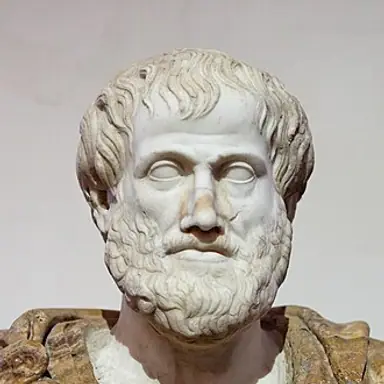
Aristotle treated the soul as the form of a living body rather than a separate substance. Awareness and perception are capacities of an organized natural body, not an independent thing.
Mind and perception are the activities of a living body's organization, so consciousness is what a suitably structured organism does, not a ghostly inner extra.
Source: De Anima
Madhyamaka Buddhism
Nagarjuna argued that all phenomena, including mind and experience, lack intrinsic essence and exist only dependently. This undermines the idea of a fixed self or a substantial consciousness.
Awareness has no independent, self-standing nature; it arises in dependence on conditions and is empty of any inherent core.
Source: Mulamadhyamakakarika
Islamic philosophy
Avicenna used the thought experiment of a 'flying man' to argue for immediate self-awareness. He held that the self is known directly, prior to any awareness of the body.
Even someone floating without any sensory input would still be aware of their own existence, which suggests self-awareness is basic and not derived from the body.
Source: Kitab al-Shifa (The Book of Healing)
Rationalism
Descartes made conscious thought the one indubitable certainty and distinguished thinking substance from extended matter. This framed the modern mind-body problem.
Mind is defined by thinking and is known with certainty from within, and it is fundamentally different in kind from physical stuff.
Source: Meditations on First Philosophy
Empiricism
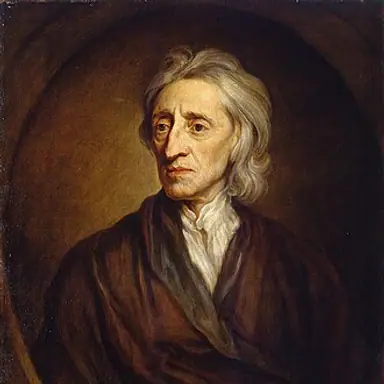
Locke linked consciousness to personal identity, treating it as the perception of what passes in one's own mind. Memory and continuous awareness constitute the self over time.
To be conscious is to be aware of one's own mental operations, and that reflexive awareness is what makes a person the same person across time.
Source: An Essay Concerning Human Understanding
German idealism
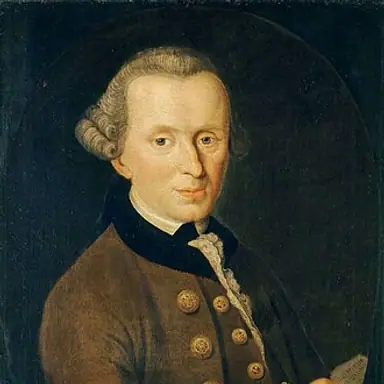
Kant argued that experience requires a unifying subject, the transcendental unity of apperception. Consciousness is the synthesizing structure that makes coherent experience possible, not a thing we can know directly.
The 'I think' must be able to accompany all my representations, and this unifying activity is a condition of experience rather than an object we observe.
Source: Critique of Pure Reason