Platonism
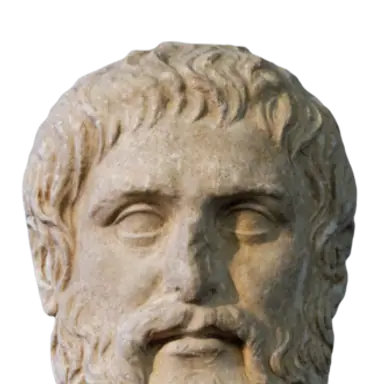
Plato identifies the self with the rational soul, which is distinct from the body and akin to the eternal Forms. Self-knowledge means turning the soul toward truth and ordering its parts under reason.
The true person is the immortal, reasoning soul, which the body merely houses and often distracts from knowing what is real.
Source: Phaedo
Buddhism
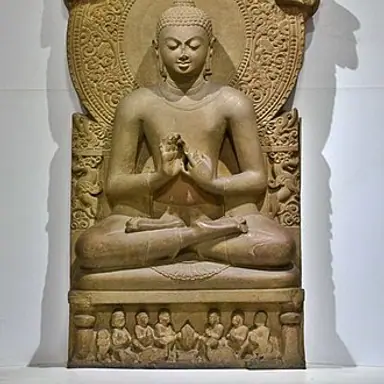
The Buddhist teaching of anatta denies a permanent, unchanging self. What we call a self is a shifting collection of aggregates: form, feeling, perception, mental formations and consciousness.
There is no fixed core behind experience; clinging to a lasting self is the root of suffering, and seeing its absence brings freedom.
Advaita Vedanta
Shankara taught that the true self, Atman, is pure consciousness and is identical with Brahman, the ultimate reality. The individual ego is a product of ignorance that superimposes limits on this unlimited awareness.
Beneath the personality lies one undivided awareness, and realizing that it is the same as ultimate reality dissolves the sense of separate selfhood.
Source: Upadesasahasri
Christian Platonism
Augustine turns inward, finding the self in memory, understanding and will, and as a restless mystery to itself. The self is made in God's image and finds rest only in God.
I am a puzzle to myself, a deep inner space of memory and desire that is only fulfilled when oriented toward God.
Source: Confessions
Rationalism
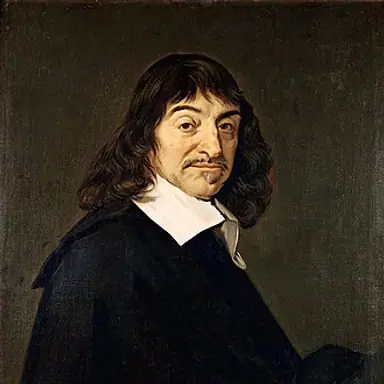
Descartes grounds the self in the certainty of thinking: doubting everything, he still cannot doubt that he is a thinking thing. The self is an immaterial mind distinct from the body.
The one thing I cannot coherently doubt is that I am thinking, so the self is first of all a thinking substance.
Source: Meditations on First Philosophy
Empiricism
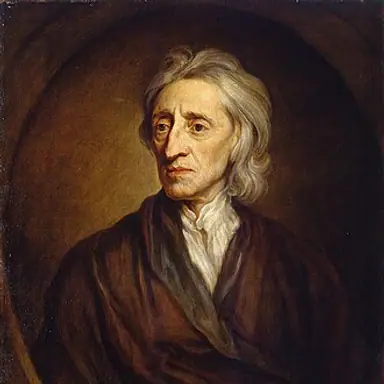
Locke defines personal identity by continuity of consciousness and memory rather than by substance. A person is a thinking being who can recognize itself as the same across time, which matters for responsibility.
I am the same self as far as my consciousness reaches back to earlier thoughts and deeds, whatever the underlying substance may be.
Source: An Essay Concerning Human Understanding