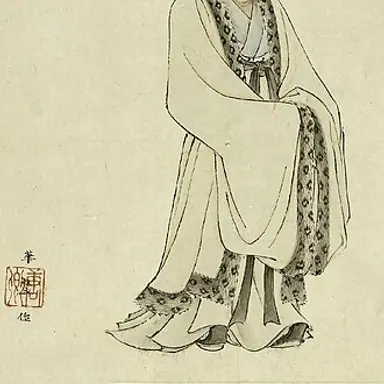
Zhuangzi's butterfly dream story questions whether we can tell waking life from dreaming. He treats the uncertainty with equanimity rather than anxiety.
Having dreamed of being a butterfly, one cannot be sure whether one is a man who dreamed or a butterfly now dreaming, and the difference may matter less than we think.
Source: Zhuangzi
Zhuangzi plays with the limits of perspective and language, suggesting that each person lives within a view that is hard to leave. Yet he also depicts moments of intuitive, wordless rapport.
We cannot fully know another's joy as they feel it, yet a shared, easy attunement can arise beyond argument and words.
Source: Zhuangzi
Zhuangzi treated conventional distinctions and anxieties about life and death with playful skepticism. He advised flowing with the Dao and accepting transformation with equanimity.
Our fixed judgments about what matters are narrow, and one can find freedom by accepting change, even death, as part of nature's course.
Source: Zhuangzi
Zhuangzi questioned whether fixed standards of right and wrong exist, noting that judgments vary with perspective. He urged a flexible, non-dogmatic responsiveness to the flow of things.
Claims about right and wrong depend on where one stands, so clinging to one fixed moral viewpoint is a kind of blindness to other valid vantage points.
Source: Zhuangzi
Zhuangzi saw the good life as spontaneous harmony with the Dao, free from rigid conventional judgments of success and status. Flexibility, playfulness and acceptance of change and death mark the sage.
We thrive by letting go of narrow human valuations and moving with the natural flow of things, at ease with whatever transformation comes.
Source: Zhuangzi
Zhuangzi suggested that much suffering comes from rigid judgments of good and bad and from resisting natural change. Accepting transformation, including death, brings ease.
We suffer by clinging to fixed distinctions and fighting the natural flow of change; yielding to it brings peace.
Source: Zhuangzi