Peripatetic
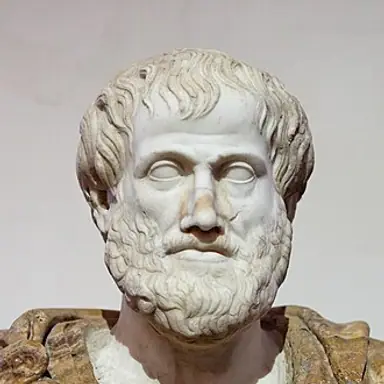
Aristotle argued that an actually infinite body is impossible, so the cosmos must be finite in extent. He allowed only a potential infinity, such as endless divisibility or endless counting.
A real, completed infinite magnitude cannot exist; the world is a bounded sphere, and infinity only exists as a never-finished process.
Source: Physics
Epicureanism
Following Epicurus, Lucretius argued the universe has no edge. If someone threw a spear at a supposed boundary, it would either pass through or be stopped by something beyond, so space must go on forever.
Any proposed edge of the cosmos would need something outside it, so the universe has to be unbounded, filled with endless atoms and countless worlds.
Source: De rerum natura
Christian Neoplatonism
Cusa proposed that the universe has no fixed center or circumference and is in some sense unbounded. He reserved true infinity for God, calling the universe privatively infinite.
The world has no center and no limiting rim we can find; only God is absolutely infinite, while the universe is boundless but derivative.
Source: On Learned Ignorance
Renaissance naturalism
Bruno championed an infinite universe populated by innumerable stars and worlds. He thought an infinite creator would naturally produce an infinite creation.
An endless divine power must express itself in an endless cosmos with countless suns and planets, with no privileged center.
Source: On the Infinite Universe and Worlds
Natural philosophy
Newton assumed infinite absolute space and, in correspondence, argued that matter distributed through infinite space could be roughly balanced in an unstable equilibrium. His framework made infinite space the stage of physics.
Space is a boundless, unchanging container, and stars scattered through it without end could hold each other in rough balance.
Source: Philosophiae Naturalis Principia Mathematica
German idealism
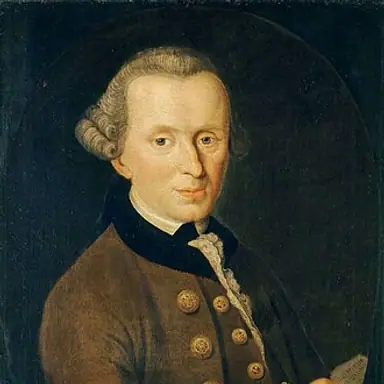
Kant held that reason falls into contradiction when asking whether the world is finite or infinite in space and time. He treated this as one of the antinomies showing the limits of reason beyond experience.
We can argue equally well that the world has a limit and that it has none, which shows the question oversteps what our knowledge can settle.
Source: Critique of Pure Reason