Platonism
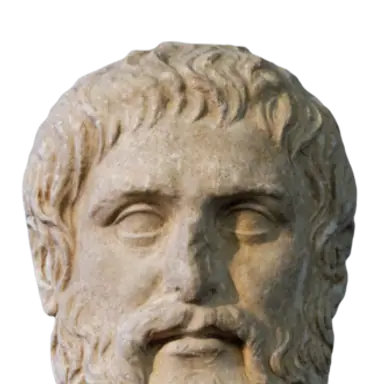
Plato held that mathematical objects such as numbers and perfect geometrical forms exist in a realm independent of the physical world and of human minds. Mathematicians, on this view, come to know them through reason rather than create them.
Mathematical truths belong to an unchanging intelligible reality, and doing mathematics is a way of recollecting or grasping what already exists apart from us.
Source: Republic
Aristotelianism
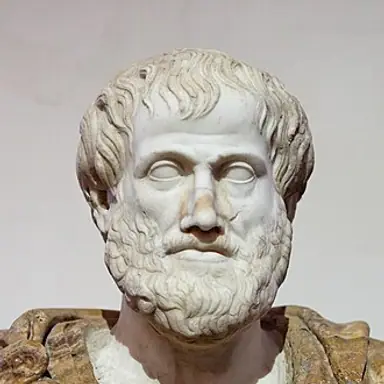
Aristotle rejected separate mathematical realms and argued that mathematical properties exist in physical things. The mathematician studies those features by abstracting them from other qualities.
Numbers and shapes are real features of material things, which the mind isolates by abstraction, so mathematics is neither a separate world nor a pure fabrication.
Source: Metaphysics
Scientific Revolution
Galileo argued that nature is structured mathematically and that scientists must learn its mathematical language to read it. This implies mathematical structure is found in the world rather than imposed on it.
The universe is written in the language of geometry, so understanding nature means uncovering mathematical relations already built into it.
Source: The Assayer
Transcendental idealism
Kant argued that mathematical truths are synthetic a priori, grounded in the forms of human intuition, space and time. Mathematics is therefore neither a report on a Platonic realm nor an arbitrary invention, but reflects the structure of our cognition.
Mathematics holds necessarily for all experience because space and time are the forms through which our minds organize experience, so its necessity comes from us yet is not arbitrary.
Source: Critique of Pure Reason
Empiricism
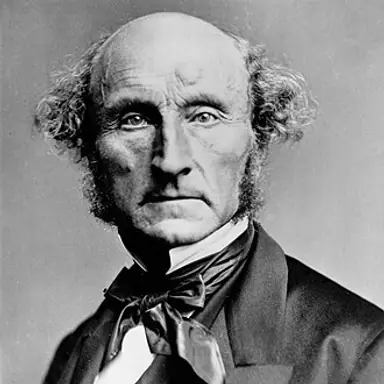
Mill held that mathematical truths are highly general empirical truths learned by induction from repeated experience. Mathematics is thus discovered in the way other natural facts are.
We believe arithmetic and geometry because they have been confirmed over and over in experience, not because they rest on special non-empirical insight.
Source: A System of Logic
Constructivism
Kronecker is associated with the view that the natural numbers are the given foundation and that other mathematical objects must be built from them. His stance foreshadowed constructivist ideas of mathematics as human construction.
Whole numbers come as a gift, while everything else in mathematics is human work built upon them.