Scholasticism
Aquinas held that truth is one, so revealed truths and truths found by natural reason cannot ultimately conflict. Reason can establish preambles of faith, such as God's existence, while faith completes what reason cannot reach.
Grace does not destroy nature but perfects it; since God authors both revelation and the human mind, properly used reason and faith must harmonize.
Source: Summa Theologiae
Islamic Aristotelianism
Averroes argued that the Qur'an itself encourages philosophical inquiry and that demonstrative reasoning and scripture cannot truly contradict. Apparent conflicts are resolved by allegorical interpretation of scripture for those trained to do so.
Truth cannot oppose truth, so when scripture seems to clash with demonstration, the text should be read figuratively rather than reason being discarded.
Source: Decisive Treatise (Fasl al-Maqal)
Christian Platonism
Augustine saw faith and understanding as mutually reinforcing: one believes in order to understand, and understanding deepens belief. Reason clarifies faith but begins within trust in authority and divine illumination.
Believe so that you may understand; faith opens the path that reason then walks further.
Source: Confessions
Early Christian theology
Tertullian is often cited as skeptical of mixing Greek philosophy with Christian revelation. He questioned what Athens had to do with Jerusalem and prized revealed truth over philosophical speculation.
Philosophy breeds heresy, and the gospel needs no support from Greek schools of thought.
Source: On the Prescription of Heretics
Existentialism
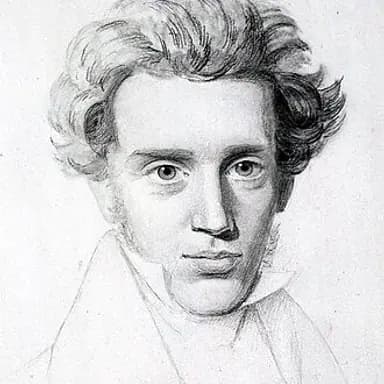
Kierkegaard argued that faith involves a passionate leap that exceeds and may offend objective reason. He saw attempts to rationally prove faith as undermining its nature as personal commitment.
Real faith lives in the tension with the absurd, and reducing it to rational proof drains it of inwardness.
Source: Fear and Trembling
German Idealism
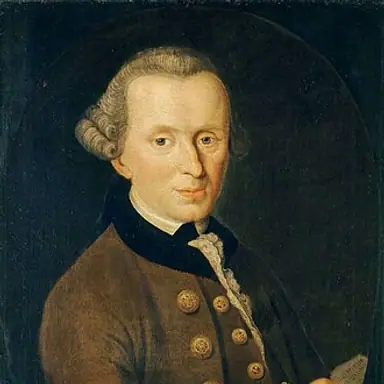
Kant limited theoretical reason to possible experience, denying proofs of God, yet argued that practical reason justifies a moral faith. Religion within the bounds of reason is grounded in morality.
I had to limit what knowledge claims in order to make room for a rational, morally grounded faith.
Source: Critique of Pure Reason