Christian theology
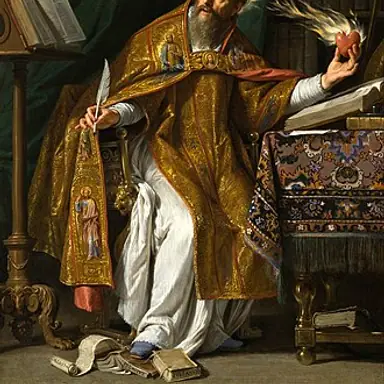
Augustine argued that time is a feature of created reality, so asking what God did before creation misconstrues the nature of time. He treated time as bound up with change and with the creaturely mind's experience of duration.
There was no earlier moment before creation, because time itself began along with the world; God stands outside time rather than waiting within it.
Source: Confessions
Greek philosophy
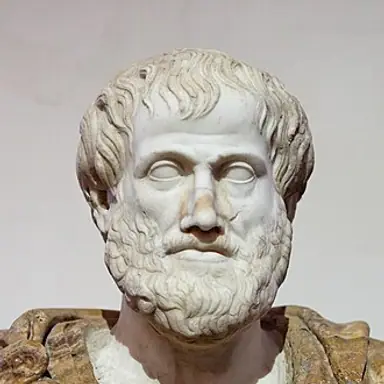
Aristotle held that the cosmos is eternal and uncreated, since motion and time can have no first moment. Any supposed beginning of change would itself presuppose a prior change.
Every beginning of motion would need an earlier motion, so the universe never had a true start and there is no absolute before to ask about.
Source: Physics
German idealism
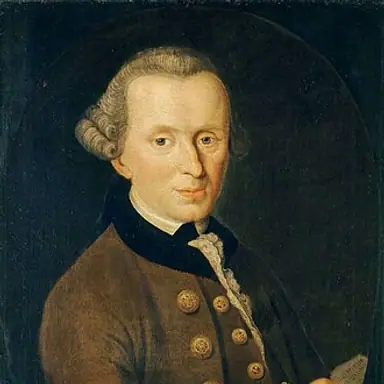
Kant presented the question of whether the world has a beginning in time as an antinomy, where reason can argue both sides equally well. He concluded that such questions overreach the limits of possible experience.
Reason can produce equally persuasive proofs that the world began and that it did not, which shows the question exceeds what human cognition can settle.
Source: Critique of Pure Reason
Physical cosmology
A Catholic priest and physicist, Lemaître proposed that the universe expanded from a primeval atom. He kept his physics separate from theology and did not treat the beginning as a proof of creation.
The universe can be traced back to an extremely dense initial state, but physics describes that origin without needing to claim it is the act of a creator.
Source: The Primeval Atom
Steady-state cosmology
Hoyle coined the term Big Bang while defending a steady-state universe with no beginning. In his model matter is continuously created as space expands, so the question of a before does not arise.
Rather than a single explosive origin, the universe has always existed and renews itself, so there is no moment that needs a prior cause.
Source: The Nature of the Universe
Theoretical physics
With James Hartle, Hawking proposed a no-boundary model in which time becomes space-like near the origin. Asking what came before is then like asking what lies south of the South Pole.
If the early universe has no edge in imaginary time, there is no earlier moment to point to, just as no place lies further south than the pole.
Source: A Brief History of Time