
Common ground
Science · Metaphysics
Are we alone in the universe?
Most of the thinkers, from Epicurus and Lucretius through Bruno, Kant, Sagan and Drake, argue that nature's vastness and uniformity make life elsewhere likely. Aristotle, Wallace, and Ward and Brownlee dissent on physical or biological grounds, and Fermi's paradox keeps the question open by asking why we see no sign of others.
Answerability
Has a right answer
72 / 100
NoneContestedFactual
Fault lines
Where they differ
- Aristotle denied that other worlds could exist at all, because his physics required one center; Epicurus and Lucretius held that infinite atoms and void make many worlds inevitable.
- Wallace and Ward and Brownlee argue that complex life needs rare conditions, so we may be nearly alone; Bruno, Fontenelle, Kant, and Sagan expect abundant inhabited worlds.
- Ward and Brownlee separate simple life, which they think may be common, from complex animal life, which they think is rare; Wallace saw advanced life as probably unique to Earth.
- Fermi stresses that the absence of visible civilizations counts against their being common; Sagan and Drake respond by searching further and estimating the odds rather than treating silence as decisive.
- The early modern thinkers reasoned by philosophical analogy and metaphysical fullness, while Drake, Wallace, and Ward and Brownlee use empirical astronomy, biology, and geology, which lead to different weightings of the evidence.
The council
12 perspectives
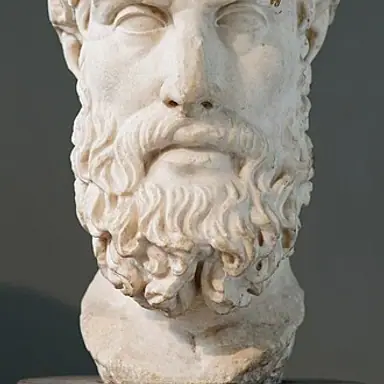
Epicurus
341–270 BCE · Greece
Epicureanism
Epicurus held that the universe is infinite and made of atoms moving in void. From this he reasoned that the same natural processes that produced our world must have produced countless others. He saw no reason to think Earth unique.
In an endless cosmos of atoms, it would be strange if only one world had come to host living things; other worlds, with their own creatures, must exist.
Source: Letter to Herodotus
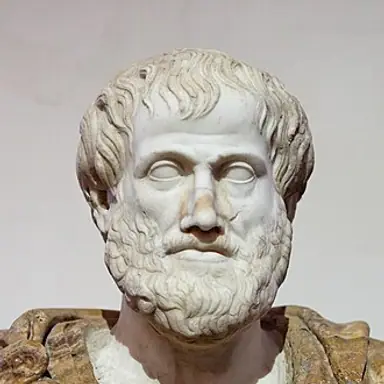
Aristotle
384–322 BCE · Greece
Aristotelianism
Aristotle argued for a single, finite, geocentric cosmos with Earth at its center. In his physics, the natural motion of earthy matter toward the center makes multiple worlds impossible. Life belongs to our world alone.
Since all earth naturally falls toward one center, there can be only one world, and so no other inhabited worlds elsewhere.
Source: On the Heavens
Lucretius
Rome
Epicureanism
Lucretius gave Epicurean atomism poetic form and argued that nature is endlessly productive. He claimed that given infinite space and matter, other worlds with living beings are inevitable.
Nature does not do things only once; with boundless atoms and space, other earths and other peoples must exist beyond ours.
Source: De rerum natura
Giordano Bruno
Italy
Renaissance Hermeticism and Copernican cosmology
Bruno extended Copernicus's model into an infinite universe filled with countless stars like our Sun, each with its own planets. He thought many of these worlds were inhabited. He was burned at the stake in 1600, partly for heterodox views.
An infinite creator would fill an infinite universe with innumerable suns and inhabited worlds, not just one small Earth.
Source: On the Infinite Universe and Worlds
Enlightenment popular science
Fontenelle popularized the Copernican system in a witty dialogue between a philosopher and a marquise. He argued by analogy that other planets are likely populated, each with beings suited to its conditions.
If Earth is just one planet among many, it would be odd for it alone to have inhabitants; other worlds likely have creatures fitted to their own climates.
Source: Conversations on the Plurality of Worlds
Christiaan Huygens
Netherlands
Scientific Revolution
Huygens, astronomer and physicist, reasoned that planets in our solar system resemble Earth and so probably host life. He speculated about plants, animals, and even rational beings elsewhere, while admitting the evidence was only analogical.
Because the other planets resemble ours and share the same Sun, it is reasonable to suppose they too bear life, perhaps even thinking creatures.
Source: Cosmotheoros
Ask your own