Peripatetic
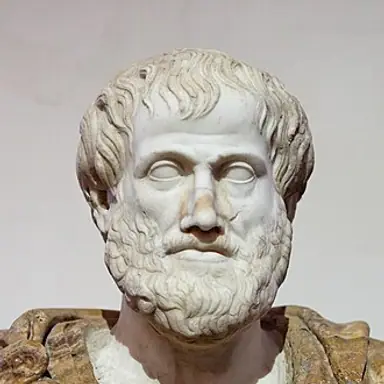
Aristotle treats time as something tied to change and motion rather than an independent entity. It exists only insofar as motion can be counted, and he wonders whether time could exist without a soul to do the counting.
Time is the measure of change with respect to before and after; without something changing, and something to count the changes, there would be no time to speak of.
Source: Physics
Christian Platonism
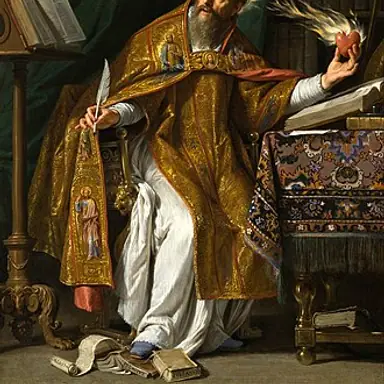
Augustine confesses that he knows what time is until asked to explain it. He locates past, present and future in the mind as memory, attention and expectation, and sees God as outside time.
The past exists only as present memory, the future as present expectation, so time is a kind of stretching of the soul.
Source: Confessions
Madhyamaka Buddhism
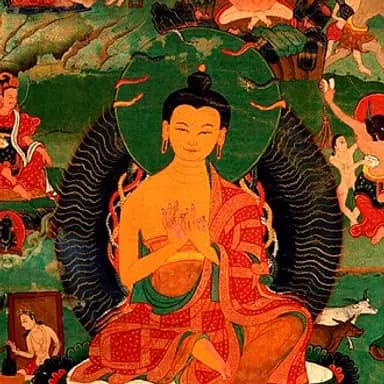
Nagarjuna analyzes time as a dependently arisen concept. Past, present and future cannot be established as independently real, since each presupposes the others.
If the present and future depend on the past, they would have to already exist in it; so time has no inherent, self-standing nature and is empty.
Source: Mulamadhyamakakarika
Islamic Peripatetic
Avicenna develops Aristotle's account, linking time to the quantity of motion. He also explores the famous floating man thought experiment that bears on self-awareness apart from temporal sensation.
Time is the quantity of continuous motion in respect of earlier and later, and it depends on the celestial motion that grounds all change.
Source: The Book of Healing (Kitab al-Shifa)
Natural philosophy
Newton posits absolute time as a real container independent of anything that happens in it. Relative, measurable times are merely approximations to this true flow.
True mathematical time flows uniformly by its own nature, regardless of any external thing, while ordinary clocks only give us relative approximations.
Source: Philosophiae Naturalis Principia Mathematica
Rationalism
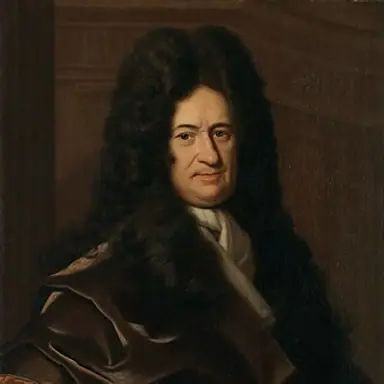
Leibniz rejects absolute time and argues it is a system of relations among events. Without events there would be nothing to distinguish one moment from another.
Time is simply the order of successive things; remove the things and their ordering, and no empty time remains.
Source: Correspondence with Samuel Clarke