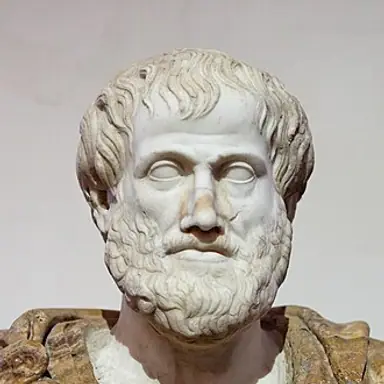
Greek philosophy
Aristotle placed living things on a hierarchy of soul, with animals possessing sensation and appetite but not rational thought. He held that animals exist in some sense for the sake of humans, though he studied them with great seriousness as natural beings with their own ends.
Animals have perceptive souls and their own natural functions, but because they lack reason they stand below humans in the order of nature and may be used for human purposes.
Source: History of Animals
Neoplatonism
Porphyry argued for vegetarianism on the grounds that animals are rational in some measure and kin to us. He rejected the claim that justice applies only among humans.
Animals share in reason and feeling to a degree, so justice should extend to them and killing them for food or sacrifice is unjust and spiritually corrosive.
Source: On Abstinence from Killing Animals
Scholasticism
Aquinas held that rational nature alone grounds direct moral claims, and that animals are ordered to human use under divine providence. He nonetheless warned that cruelty to animals can habituate people to cruelty toward humans.
Animals are not owed duties of justice for their own sake, yet cruelty toward them is wrong because it corrupts character and disorders our treatment of fellow humans.
Source: Summa Contra Gentiles
Rationalism
Descartes treated animals as complex machines without thinking minds, which led many to deny they feel pain as we do. His view became a central target for later defenders of animal welfare.
Since animals lack a rational mind, their behavior can be explained mechanically, and they do not have the kind of inner life that would give them moral claims.
Source: Discourse on Method
1724–1804 · Prussia (Germany)
Kantian ethics
Kant grounded direct moral duties in rational autonomy, which animals lack. He still argued that we have indirect duties regarding animals, since mistreating them damages our moral sensibilities.
We owe duties to rational beings only, but being cruel to animals weakens compassion in us, so we should treat them kindly for the sake of our own humanity.
Source: Lectures on Ethics
Utilitarianism
Bentham shifted the moral question from reason or language to the capacity to suffer. He anticipated that animals might one day be recognized as holders of protections now denied them.
What matters morally is not whether a creature can reason or talk but whether it can suffer, and animals plainly can, so their pain counts.
Source: An Introduction to the Principles of Morals and Legislation