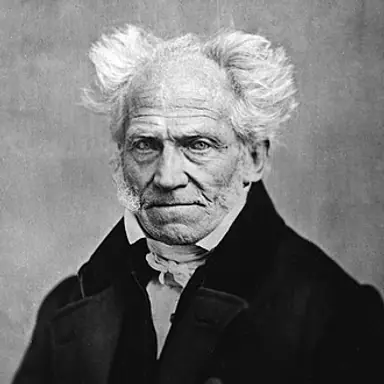
Schopenhauer based ethics on compassion and criticized Western philosophy for disregarding animals. He saw humans and animals as manifestations of the same underlying will.
Compassion is the root of morality and it naturally includes animals, who share our essential nature as striving, suffering beings.
Source: On the Basis of Morality
Schopenhauer argued that a person can do what they will but cannot will what they will. Motives necessitate action given one's fixed character.
You can act on your desires, but the desires themselves are not chosen by you, so the sense of free choice is an illusion about where our wants come from.
Source: On the Freedom of the Will
Schopenhauer saw the underlying reality as a blind, aimless striving he called Will. The universe has no benevolent goal, and meaning must be sought in compassion or renunciation.
At bottom the world is an endless purposeless striving, and any sense of purpose is found only in how we respond to it, not in the cosmos itself.
Source: The World as Will and Representation
Schopenhauer viewed life as driven by a blind, purposeless will that produces endless striving and suffering. Meaning is not found in the world, though aesthetic contemplation, compassion and asceticism offer relief.
Existence is an aimless striving that cannot satisfy us, so release comes only by quieting desire through art, compassion and renunciation.
Source: The World as Will and Representation
Schopenhauer argued that a person can do what they will, but cannot will what they will. Actions follow necessarily from character and motives, though he located a kind of freedom in the underlying will as thing in itself.
A person can act on their wishes, yet the wishes themselves are not chosen, so each act follows necessarily from character meeting circumstance.
Source: Essay on the Freedom of the Will
Schopenhauer held that life is dominated by striving and suffering, driven by a blind will that uses sexual desire to perpetuate itself. On this view, procreation serves the species' will rather than the individual's happiness.
The urge to have children is nature's trick to keep the cycle of striving going, so one should question whether it serves one's own good or only the will to live.
Source: The World as Will and Representation
Schopenhauer reads romantic love as a disguised instrument of the species' will to reproduce. Individuals feel it as personal passion, but nature is using them for its own ends.
What lovers experience as transcendent devotion is largely nature's trick to ensure the next generation, though compassion offers a more genuine form of love.
Source: The World as Will and Representation
Schopenhauer saw existence as driven by a blind will that produces endless striving and suffering. Relief comes temporarily through aesthetic contemplation, compassion, and ascetic denial of the will.
Life has no inherent happy purpose; the best response is to loosen the grip of desire through art, sympathy, and renunciation.
Source: The World as Will and Representation
Schopenhauer saw wisdom as insight into the blind striving of the will and the suffering it produces. He recommended restraint of desire, compassion, and aesthetic contemplation as relief.
A wise person understands that desire drives endless dissatisfaction, and so cultivates detachment, compassion, and a modest, quiet life.
Source: The World as Will and Representation
Schopenhauer saw the world as driven by a blind, insatiable will. Constant striving and dissatisfaction make suffering the basic condition of life, relieved only by art, compassion, and ascetic denial.
Because existence is driven by endless wanting that can never be fully satisfied, suffering is built into life itself.
Source: The World as Will and Representation