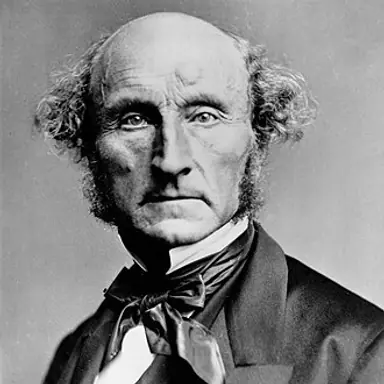
Mill defended representative democracy as the form of government best suited to developing citizens' abilities, while warning against the tyranny of the majority. He insisted on individual liberty, free discussion, and protections for minorities.
Self-government is best when it is representative and educates citizens, but society must still guard individual freedom against majority pressure.
Source: Considerations on Representative Government
Mill defends individual liberty as essential to human development and social progress, yet also argues for women's equality and sympathizes with cooperative economic reform.
Society may limit a person's freedom only to prevent harm to others, and equal freedom for all, including women, is what lets human potential flourish.
Source: On Liberty
Mill treats the rule of keeping faith as one of the most important social rules, because the security it provides is vital to human welfare. Still, he admits that other moral considerations can occasionally outweigh it.
Fidelity is so important to social life that exceptions should be rare, but where it conflicts with a weightier good, it can rightly yield.
Source: Utilitarianism
Mill judged actions by their tendency to promote happiness. He regarded truthfulness as extremely valuable for social trust but accepted rare exceptions where deception averts great harm.
Honesty usually serves the general good so strongly that lying is seldom justified, yet when a falsehood prevents serious harm, the principle of utility can permit it.
Source: Utilitarianism
Mill held that mathematical truths are highly general empirical truths learned by induction from repeated experience. Mathematics is thus discovered in the way other natural facts are.
We believe arithmetic and geometry because they have been confirmed over and over in experience, not because they rest on special non-empirical insight.
Source: A System of Logic
Mill judges actions by their contribution to overall happiness, yet defends individuality and the free development of one's own nature as a key ingredient of wellbeing and social progress.
Aim at the greatest good, but remember that people who live by their own distinctive powers often enrich society more than those who merely conform.
Source: Utilitarianism
Mill argued that actions are right insofar as they promote happiness and wrong insofar as they produce the reverse. Means are judged by their consequences, though he stressed rules and rights as safeguards of long-term welfare.
What makes an action right is the overall happiness it brings, so means are justified by results, but the best results usually come from respecting justice and liberty.
Source: Utilitarianism
Mill holds that actions are right insofar as they promote overall happiness. Duties of justice are especially strong because they protect the security on which everyone depends, and liberty limits what others may demand.
You owe others consideration of their happiness equal to your own, and you must not harm them, while they may not coerce you merely for your own good.
Source: Utilitarianism
Mill grounds duty in the promotion of general happiness. Something is a duty when failing to do it would properly warrant punishment or social censure, because it undermines the common good.
A duty is an act whose neglect is rightly blamed, because society is better off when such acts are required of everyone.
Source: Utilitarianism
Mill defends individual liberty against the coercion of both state and social opinion. He argues that individuals should be free to pursue their own good in their own way, limited only by harm to others.
Society may rightly restrain a person only to prevent harm to others; over their own life, body and mind, each person is sovereign.
Source: On Liberty
Mill explains justice as a set of especially important rules protecting individual rights, whose strength comes from their service to general welfare. The sentiment of justice grows from the desire to punish harm.
Justice consists of the rules that safeguard people's essential claims, and its special force comes from how vital they are to human well-being.
Source: Utilitarianism
Mill defended utilitarianism, judging actions by their contribution to overall happiness, while distinguishing higher intellectual pleasures from lower ones. He also stressed individuality and freedom to experiment with ways of living.
Aim at the greater happiness of all, prize the higher pleasures of mind and moral feeling, and let people shape their own lives as long as they do not harm others.
Source: Utilitarianism
Mill defended a refined utilitarianism that ranks intellectual and moral pleasures above mere sensation. He also stressed individuality and liberty as conditions for people to discover their own good.
The best life combines higher pleasures of mind and feeling with the freedom to shape one's own way of living, while contributing to the general happiness.
Source: Utilitarianism