Religion · Metaphysics

Does the universe have a purpose?

The thinkers split between those who find purpose built into the cosmos, whether through nature itself (Aristotle), God (Aquinas, Leibniz), emanation (Avicenna), or evolution (Teilhard), and those who deny it (Democritus, Spinoza, Schopenhauer, Nietzsche, Camus, Weinberg). Kant stands between the two, treating purpose as a necessary way of judging nature that cannot be proven, and locating real purpose in moral freedom.

12 perspectivesClaude Sonnet 5.5Updated Oct 27, 2026A fresh run is rate limited and uses the same request limits as the rest of Perspective.

Answerability

No right answer

12 / 100

NoneContestedFactual

Fault lines

Where they differ

  • Aristotle sees purpose as built into nature without a designer, whereas Aquinas and Leibniz ground it in a divine intelligence that directs or chose the world.
  • Avicenna has purpose arise through necessary emanation from a first being toward which all things yearn, while Leibniz stresses a deliberate divine choice of the best possible world.
  • Democritus attributes order to necessity and chance atomic motion, while Spinoza attributes it to the necessity of God or Nature's essence. Both deny aims, but Spinoza's necessity is rational and divine in character, not mechanical chance.
  • Kant holds that we cannot know whether the universe has a purpose and can only judge it as if it did, whereas Aristotle and Aquinas treat purpose as a real feature of nature.
  • Teilhard sees evolution as directed toward a final Omega Point of consciousness, while Schopenhauer sees the underlying reality as blind, aimless striving.
  • Camus holds that we should live without false purposes and in defiant awareness, Nietzsche that we should create values and affirm life, and Schopenhauer that we should seek meaning in compassion or renunciation; Weinberg offers a more modest naturalist view that people craft their own purposes.
  • Weinberg derives his conclusion from what physics reveals, while Camus and Nietzsche reach theirs through reflection on human experience and the collapse of religious belief.

The council

12 perspectives

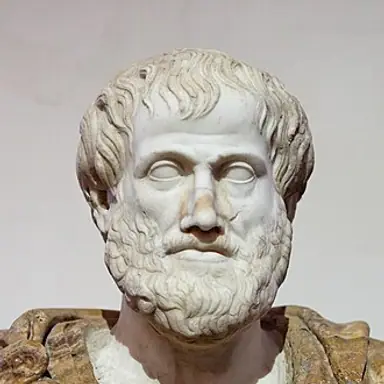
Aristotle

384–322 BCE · Greece

Peripatetic / Teleology

Aristotle held that natural things are best explained by the ends they aim at, so purpose is built into nature. He did not picture a designer, but saw the cosmos as ordered toward actuality and ultimately drawn toward an unmoved mover.

Nature does nothing without an end; to understand why things are as they are, we must ask what they are for, and the whole cosmos is oriented toward the perfect activity of pure thought.

Source: Physics

Atomism

Democritus explained the world through atoms moving in a void, without any guiding intention. Order arises from necessity and chance collisions, not from goals.

Everything comes about from the motion and combination of atoms by necessity; there is no overarching aim behind the arrangement of worlds.

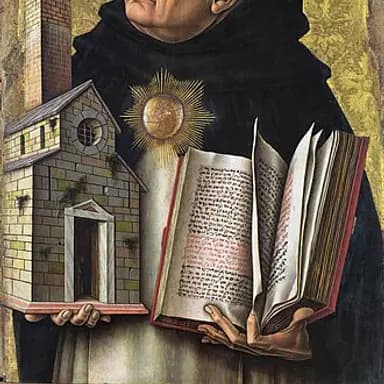
Thomas Aquinas

1225–1274 · Italy

Scholasticism

Aquinas argued that the regularity of natural things acting toward ends points to an intelligent source directing them. The universe's purpose is grounded in God as its first cause and final good.

Things lacking intelligence still act for ends, so they must be directed by a mind; creation as a whole is ordered toward the divine goodness.

Source: Summa Theologiae

Islamic Neoplatonic Aristotelianism

Avicenna described the universe as emanating necessarily from a necessary being. Existence flows from divine intellect, and each level of reality yearns toward its source.

The cosmos follows from the necessary existent through an ordered chain, and all things are drawn by desire toward the perfection of that source.

Source: The Book of Healing

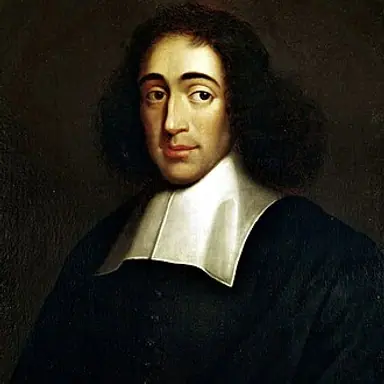
Baruch Spinoza

1632–1677 · Netherlands

Rationalism

Spinoza rejected final causes in nature as a projection of human wishes. God or Nature acts from necessity, not for goals, so the universe has no purpose beyond its own necessary being.

People imagine that nature aims at ends because they themselves act for ends; in truth everything follows from the necessity of nature's own essence.

Source: Ethics

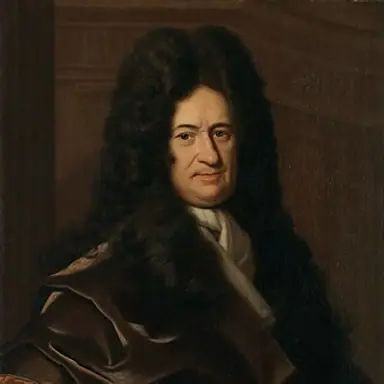
Rationalism

Leibniz held that the universe is the product of a perfectly wise God who chose the best among possible worlds. Efficient causes and final causes work in harmony, so purpose pervades reality.

The actual world was selected for its overall perfection, and mechanical explanation and purposive explanation each describe the same ordered whole.

Source: Theodicy

Ask your own

0 / 300