Mind · Philosophy of mind

Is the mind the same as the brain?

The thinkers split into those who identify mind with the brain (Smart, Churchland, and in a qualified way Searle), those who say it is something more than or other than the brain (Descartes, Leibniz, Chalmers), and those who place it in organization, the whole body or the wider world (Aristotle, Spinoza, Ryle, Putnam, Merleau-Ponty, Clark). Their core dispute is whether a complete physical account of the brain would capture everything about mind, in particular subjective experience, and where mind should be located.

12 perspectivesClaude Sonnet 5.5Updated Oct 27, 2026A fresh run is rate limited and uses the same request limits as the rest of Perspective.

Answerability

Contested

42 / 100

NoneContestedFactual

Common ground

Where they agree

  • Most of these thinkers doubt that mind is simply a separate, ghostly…
  • Aristotle, Spinoza, Ryle, Merleau-Ponty and Searle all resist the Cartesian idea that…
  • Smart, Searle and Churchland agree that mental life depends on, or is…
  • Putnam, Merleau-Ponty and Clark all hold that what makes something mental is…
  • Leibniz, Chalmers and Descartes all hold that a purely physical description seems…

Fault lines

Where they differ

  • Identity: Smart and Churchland say mind is the brain, or brain activity. Descartes says they are distinct substances, and Chalmers says experience is not fully reducible to brain function.
  • Reduction versus emergence: Smart expects a straightforward identity, while Searle treats consciousness as a real, irreducibly subjective feature caused by the brain. Churchland goes further and expects some everyday mental concepts to be revised or discarded.
  • Role versus matter: Putnam says mental states are defined by function and could be realized in other substrates, so mind is not strictly the brain. Searle replies that running the right program is not enough, because the brain's biology matters.
  • Location of mind: Merleau-Ponty locates mind in the embodied person engaged with the world, and Clark extends it into tools and environment. Smart, Searle and Churchland keep it in the brain.
  • Whether mind is an inner thing at all: Ryle treats mental terms as describing dispositions to behave, so neither a ghost nor a brain state is the mind. Descartes and Smart both treat mind as something inner, though they disagree about what it is.
  • Mechanism: Leibniz argues that no machine-like arrangement of parts could yield perception, which Churchland and Smart would reject. Spinoza and Aristotle avoid the problem by treating mind and body as two aspects or the form and matter of one thing.
  • Aristotle and Spinoza deny that mind and body are separate things, yet neither calls them simply identical. Aristotle treats mind as the form of a living body, and Spinoza treats the two as one reality under two attributes.

The council

12 perspectives

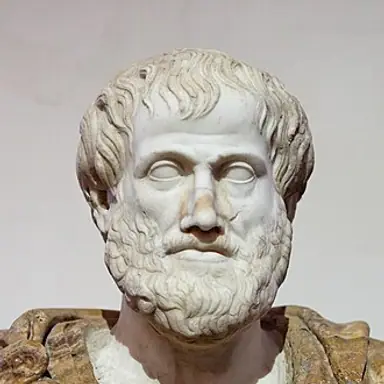
Aristotle

384–322 BCE · Greece

Hylomorphism

Aristotle treated the soul as the form of a living body rather than a separate substance. Mind-related capacities are the organized activities of a living organism, though he gave the intellect a special, puzzling status.

Mind is not a thing alongside the body but the way a living body is organized and active; separating them is like separating the shape of a wax seal from the wax.

Source: De Anima

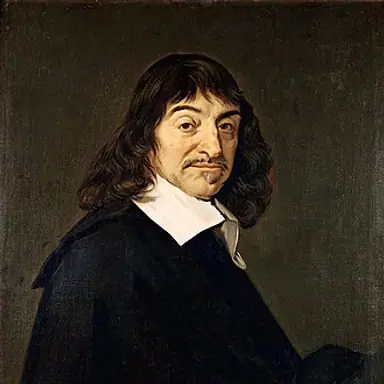
René Descartes

1596–1650 · France

Substance dualism

Descartes argued that mind is a thinking, non-extended substance distinct from the extended body, including the brain. He held that they interact, famously locating the interface in the pineal gland.

Because I can doubt that my body exists but not that I am thinking, the mind must be a different kind of thing from any physical organ.

Source: Meditations on First Philosophy

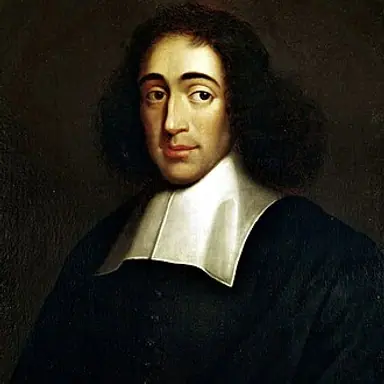
Baruch Spinoza

1632–1677 · Netherlands

Monism / dual-aspect

Spinoza rejected interaction between two substances, holding that mind and body are one reality understood under two attributes, thought and extension. They are not identical as descriptions, yet they are not separate things.

The order of ideas and the order of bodily events are the same underlying order seen in two ways, so mind and body neither cause nor exist apart from each other.

Source: Ethics

Rationalism

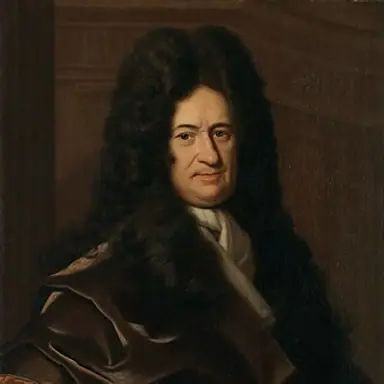
Leibniz argued that perception cannot be explained by mechanical parts alone. Using the image of walking inside a brain-sized mill, he claimed one would find only gears pushing each other, never an experience.

No arrangement of moving physical parts, however intricate, would reveal a perception, so the mind cannot simply be a machine-like brain.

Source: Monadology

Gilbert Ryle

United Kingdom

Analytic / ordinary language philosophy

Ryle criticized the Cartesian picture as a category mistake, a ghost in the machine. For him, mental terms describe dispositions and patterns of behavior, not an inner object, whether immaterial or neural.

Asking where the mind sits in addition to the body misuses language; minds are ways people behave and are disposed to behave.

Source: The Concept of Mind

Type identity theory

Smart, with U. T. Place, defended the view that sensations are identical with brain processes, as lightning is identical with electrical discharge. The identity is a contingent scientific discovery, not a conceptual truth.

Mental states turn out to be brain processes, just as water turned out to be H2O, and the apparent gap is a matter of different vocabularies.

Source: Sensations and Brain Processes

Ask your own

0 / 300