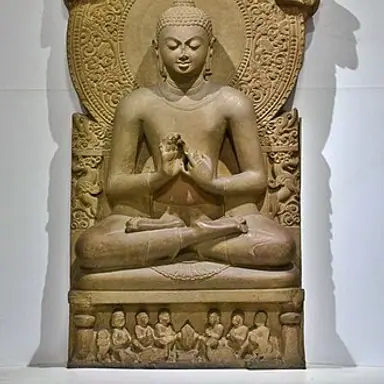
The Buddha's teaching of anatta denies a permanent, unchanging self. What we call a person is a changing stream of aggregates: form, feeling, perception, mental formations, and consciousness.
Search as you may, you will find no fixed self behind experience, only processes that arise and pass away; clinging to a self is the root of suffering.
Source: Anattalakkhana Sutta
The Buddha taught that there is no fixed self, yet causal continuity carries on through karma and rebirth. Liberation (nirvana) ends the cycle of becoming.
Death is not an end but a transition driven by craving and karma; only awakening breaks the chain of rebirth.
Source: Dhammapada
The Buddha diagnoses craving and attachment as the source of dissatisfaction. Success is progress toward freedom from suffering through ethical conduct, meditation and wisdom.
Gaining worldly things does not end dissatisfaction; loosening craving and cultivating clarity and compassion does.
Source: Dhammapada
The Buddha taught that suffering arises from craving and attachment, and that a life of ethical conduct, mental discipline, and wisdom, the Eightfold Path, leads to freedom from it. The best life is a middle way between indulgence and severe asceticism.
Reduce suffering for yourself and others by loosening craving, acting with compassion and honesty, and training the mind through meditation and insight.
Source: Dhammapada (traditional collection of sayings)
The Buddha diagnosed life as marked by suffering arising from craving and attachment. Meaning lies in the path of ethical conduct, meditation, and wisdom that leads to liberation.
The point of life is to understand the causes of suffering and to cultivate insight and compassion so as to be freed from them.
Source: Dhammapada (attributed teachings)
The Buddhist teaching of anatta denies a permanent, unchanging self. What we call a self is a shifting collection of aggregates: form, feeling, perception, mental formations and consciousness.
There is no fixed core behind experience; clinging to a lasting self is the root of suffering, and seeing its absence brings freedom.
In Buddhist teaching, wisdom (prajna) is insight into impermanence, suffering, and non-self. It is one of the three trainings alongside ethical conduct and meditation, and leads to liberation.
Wisdom is seeing reality clearly as it is, including its impermanence, and thereby loosening craving and attachment that cause suffering.
Source: Dhammapada
The Buddha taught that suffering arises from craving and attachment, and that a good life follows the Eightfold Path of right view, conduct and mindfulness. Compassion and insight lead toward liberation from suffering.
Living well means loosening grasping and aversion through ethical conduct, meditation and wisdom, so that suffering lessens for oneself and others.
The Buddha taught that suffering arises from craving and attachment, and that a path of ethical conduct, meditation, and wisdom can end it. Life's aim is liberation and compassion rather than accumulation.
Loosen your grip on craving, act with kindness, and train your attention so that you suffer less and help others do the same.
Source: Dhammapada (attributed teachings)
The Buddha taught that suffering (dukkha) is a basic feature of conditioned existence. He traced it to craving and ignorance, and proposed a practical path to its cessation.
Suffering arises because we cling to impermanent things as if they could last; when craving and ignorance are released, suffering can end.
Source: Dhammacakkappavattana Sutta