
Common ground
Philosophy
What is freedom?
The thinkers split between freedom as non-interference (Hobbes, Mill, Berlin), freedom as self-mastery through reason, virtue or self-given law (Aristotle, Epictetus, Augustine, Spinoza, Rousseau, Kant), and freedom as an existential or social condition (Sartre, Beauvoir, Sen). They largely agree that freedom is not mere impulse, but disagree on whether it is inner or outer, individual or shared, and compatible with causal necessity.
Answerability
No right answer
15 / 100
NoneContestedFactual
Fault lines
Where they differ
- Where freedom is located: Epictetus and Spinoza place it in the inner life of judgment and understanding; Hobbes, Mill and Berlin place it in the absence of outside obstacles; Rousseau and Aristotle place it in political participation; Sen places it in real opportunities.
- Negative versus positive: Hobbes, Mill and Berlin define freedom as non-interference, while Rousseau, Kant, Spinoza and Augustine define it as self-mastery or acting according to the good. Berlin warns that the second kind of view can justify coercion.
- Freedom and necessity: Hobbes and Spinoza treat freedom as compatible with causal necessity, whereas Sartre holds that humans are radically and inescapably free, with no fixed nature determining them.
- The role of grace and the good: Augustine says true freedom needs divine grace and love of God, whereas Kant and Spinoza ground freedom in human reason alone, and Sartre denies any given human nature or moral order.
- Individual versus collective: Mill and Sartre emphasize the sovereign individual; Rousseau and Beauvoir stress that freedom depends on a community or on the freedom of everyone else.
- Formal versus material freedom: Sen counts poverty, ill health and lack of education as unfreedoms, while Hobbes and Berlin focus on legal and coercive barriers, and Epictetus holds that external hardship cannot take away inner freedom.
The council
12 perspectives
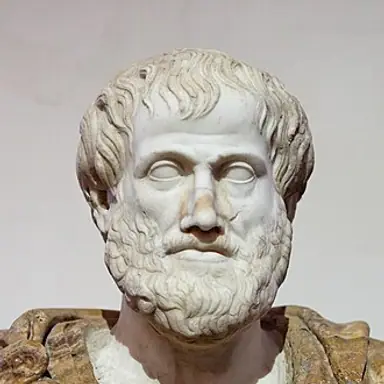
Aristotle
384–322 BCE · Greece
Greek philosophy
Aristotle links freedom to citizenship and self-rule in the polis. A free person is not living for another's purposes and takes part in ruling and being ruled in turn. Freedom is realized through rational activity and virtue.
To be free is to live for one's own ends rather than another's, sharing in the governance of the community and acting according to reason and virtue.
Source: Politics
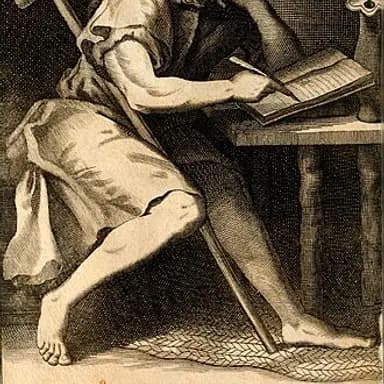
Epictetus
Roman Empire (Greece)
Stoicism
A former slave, Epictetus argues that freedom is an inner condition. It consists in distinguishing what is up to us, our judgments and choices, from what is not. External masters cannot enslave a mind that wants nothing beyond its control.
You are free to the extent that you desire only what lies within your own power, since whoever depends on things others control remains their servant.
Source: Discourses
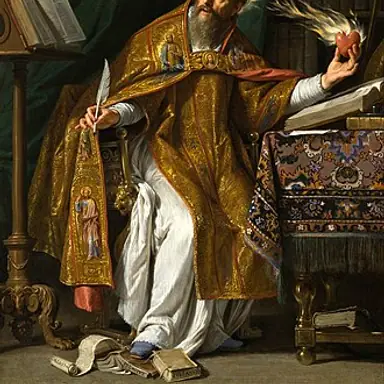
Augustine of Hippo
North Africa
Christian philosophy
Augustine distinguishes mere freedom of choice from true freedom. The will, damaged by sin, is only truly free when it is healed by grace and directed toward the good and God.
Merely being able to choose is a weak form of liberty; real freedom is the will's ability to love what is truly good, which requires divine grace.
Source: On Free Choice of the Will
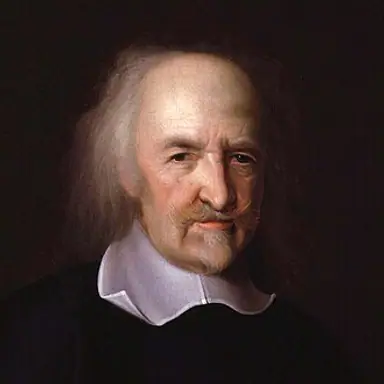
Thomas Hobbes
England
Materialist political philosophy
Hobbes defines freedom negatively as the absence of external impediments to motion or action. He holds that freedom is compatible with necessity and with fear, and that law does not remove liberty but shapes its scope.
A person is free when nothing external blocks what they are willing to do; liberty is simply unobstructed movement, even within a causal world.
Source: Leviathan
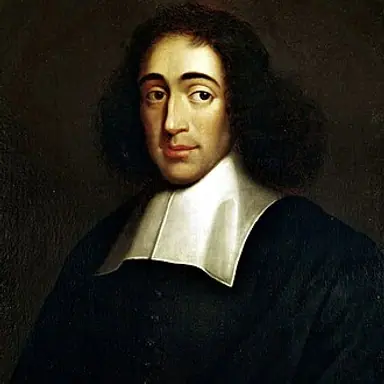
Baruch Spinoza
1632–1677 · Netherlands
Rationalism
Spinoza rejects free will as uncaused choice. Freedom means acting from the necessity of one's own nature, guided by adequate understanding rather than driven by passions.
We become free not by escaping causation but by understanding it, so our actions flow from our own reason rather than from external forces and emotions.
Source: Ethics
Jean-Jacques Rousseau
Geneva/France
Social contract theory
Rousseau holds that true freedom is found in a political community where citizens give themselves the laws. Dependence on other individuals is slavery, while obeying a general will one co-authors is liberty.
Freedom is not doing whatever one likes but obeying laws one has prescribed to oneself as part of a self-governing people.
Source: The Social Contract
Ask your own